The Art of Incense: Building a Daily Ritual Practice
Incense Ritual Guide: Build a Daily Meditation Practice
Estimated reading time: 10 minutes
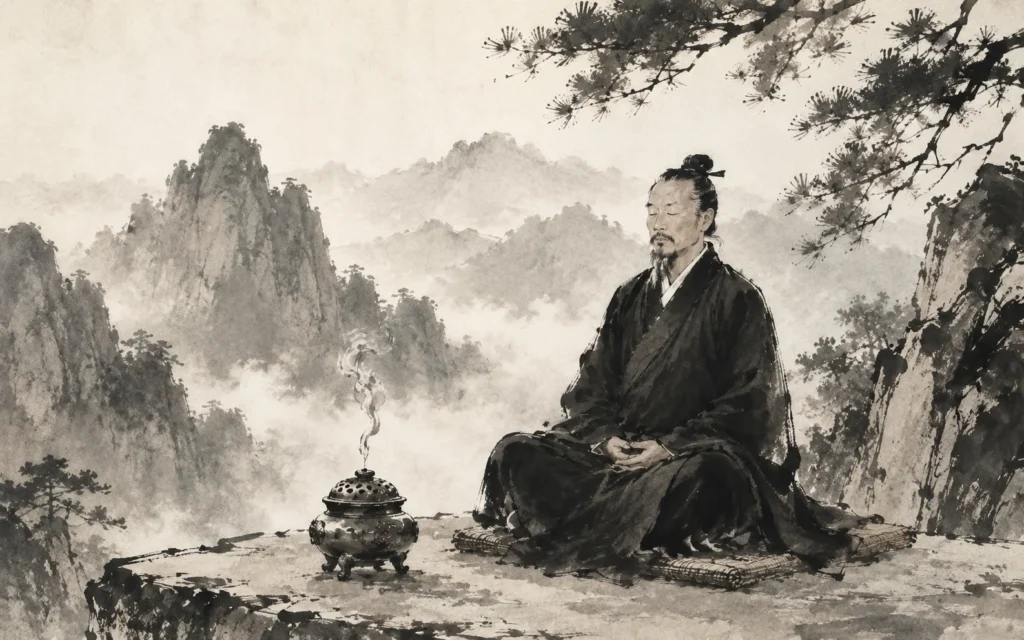
There’s a moment — perhaps you’ve experienced it — when you light a stick of incense and the room shifts. Not dramatically. Nothing moves. The light stays the same. But something in the air changes, and with it, something in you. Your breathing slows. Your thoughts settle. For a few minutes, the relentless forward momentum of modern life pauses, and you remember what it feels like to simply be. That shift is the essence of an incense ritual — a deliberate, sensory practice that transforms ordinary moments into anchors for calm and presence.
This is the oldest purpose of incense. Long before it was a lifestyle accessory or an Instagram aesthetic, incense was a technology of inner transformation — used in temples, meditation halls, and private chambers across China, Japan, India, and the Middle East as a bridge between the ordinary mind and something deeper. The incense ceremony, known as Kodo in Japan and Xiang Dao in China, has been refined over millennia as a contemplative discipline, not merely a fragrance experience.
At Serene Orient, we believe that this ancient practice doesn’t need to be complicated or time-consuming to be effective. Five minutes. One stick of incense. A few intentional breaths. That’s enough to change the texture of your entire day.
This guide will walk you through everything you need to build a personal incense meditation practice — from choosing your first scent to designing a practice that fits seamlessly into your life.
Why an Incense Ritual Matters (Not Just “Burning Something Nice”)
The word “ritual” can feel heavy, even intimidating. It conjures images of elaborate ceremonies, religious formality, or the kind of disciplined routine that belongs to monks and wellness influencers. But at its core, a ritual is simply an action performed with intention.
You can drink coffee mechanically, or you can drink it while genuinely savoring each sip. Both are the same physical act; only the quality of attention differs. Ritual is the practice of adding that attention deliberately.
When you light incense as a ritual — rather than merely as background fragrance — you create what psychologists call a “boundary marker”: a sensory signal that tells your brain, this moment is different from the rest of the day. Over time, your nervous system learns to associate the scent, the smoke, and the act of lighting with a state of calm focus. The ritual becomes a shortcut. What once took twenty minutes of meditation can now take three breaths with a familiar scent.
This is why incense has endured across cultures and millennia. It’s not just pleasant — it’s functional. The olfactory system connects directly to the brain’s limbic center (the seat of emotion and memory), bypassing the slower, more analytical pathways that other senses travel through. Research published in Frontiers in Behavioral Neuroscience (2016) confirmed that olfactory stimulation directly modulates the amygdala and hippocampus, the brain regions responsible for emotional regulation and memory formation. When you smell something, you don’t think about it first — you feel it. This makes scent one of the most powerful tools available for shifting your internal state.
How to Choose the Right Incense for Your Ritual
The first question most people ask is: Which incense should I start with? The answer depends less on what smells good (though that matters) and more on what you want the ritual to do.
Different scents carry different energetic qualities, and in the Five Elements framework that guides our entire incense collection, each scent maps to a specific element and its corresponding effects:
Best Grounding Incense for Calm and Stability (Earth Element)
If your mind races constantly and you struggle to feel present, Earth-element scents create a stabilizing, centering effect. Cinnamon is warm, sweet, and deeply comforting — it’s the scent equivalent of a weighted blanket. It works beautifully for evening rituals, during stressful periods, or whenever you need to feel more rooted in your body. For a deeper exploration of Earth energy and its role in grounding your practice, see our guide to the Earth element in Chinese philosophy.
Our Natural Pine Cone Incense are infused with natural aromatic oils and burn slowly with a warm, woodsy aroma that grounds and comforts.
Sandalwood Incense for Mental Clarity and Focus (Metal Element)
If you’re preparing for deep work, creative writing, or any activity that requires sustained concentration, Metal-element scents offer a clean, clarifying effect. Sandalwood has been used for centuries in meditation traditions precisely because it quiets mental chatter without causing drowsiness. It’s alert calm — the state where your best thinking happens. If you want to explore the full range of this revered wood, our complete sandalwood guide covers varieties, sourcing, and how to identify authentic sandalwood.
Our Pocket Incense feature a natural sandalwood base in a convenient matchbox-style design — compact, portable, and perfect for daily ritual.
Heart-Opening Rose Incense for Emotional Warmth (Fire Element)
If you’re working through difficult emotions, seeking creative inspiration, or want to create an atmosphere of warmth and connection, Fire-element scents open the heart center. Rose is the quintessential Fire scent — not the cloying, synthetic rose of cheap air fresheners, but the complex, layered aroma of real damask rose that shifts as it burns. Those drawn to Fire energy may also enjoy exploring the fire element in Chinese philosophy and how it shapes personality and relationships.
Our Hand-Rolled Rose Incense Sticks are crafted with natural rose petals and a sandalwood base, producing deep floral notes that unfold gradually as they burn.
Energizing Incense for Growth and New Beginnings (Wood Element)
If you’re starting something new — a project, a conversation, a chapter of life — Wood-element scents carry the fresh, green energy of expansion and possibility. Cedar and bamboo together create an aroma that feels like walking into a forest after rain: clean, vital, and full of quiet potential.
Our Longjing Green Tea Incense Sticks capture the subtle, grassy-sweet aroma of Dragon Well green tea — fresh, gentle, and quietly energizing.
Agarwood Incense for Deep Reflection and Intuition (Water Element)
If your practice is contemplative — journaling, evening meditation, or simply sitting with your thoughts before sleep — Water-element scents offer depth and stillness. Agarwood (oud) is the most revered incense material in the world for good reason. Its aroma is complex, shifting, and profoundly calming — it seems to slow time itself. For a thorough introduction to this extraordinary material — including how to distinguish genuine agarwood from synthetic imitations — see our complete agarwood incense guide.
Our No-Binder Small Cloud Coil Incense are crafted without adhesive binders for a purer burn, producing a clean, contemplative scent that lasts approximately two hours per coil. For a lighter Water-element experience, Hand-Rolled Jasmine Incense Sticks offer a light, ethereal jasmine fragrance that is deeply calming.
Not sure which element you need most? Our Five Elements Calculator analyzes your BaZi birth chart to reveal which elements are dominant or deficient in your personal energy profile — and recommends specific scents and jewelry pieces accordingly.
The Five-Minute Incense Ritual for Beginners: Step by Step
You don’t need an hour, a meditation cushion, or any special training. Here’s a complete incense ritual that takes five minutes and works with any scent:
Step 1: Prepare Your Space (30 seconds)
Choose a consistent spot — a desk corner, a windowsill, a bedside table. Consistency is what transforms a one-off action into a ritual. Place your incense burner there permanently. Over time, simply looking at that spot will begin to trigger the calm, focused state you’re building.
Step 2: Light with Intention (15 seconds)
Hold the incense stick or cone in your hand for one breath before lighting it. This tiny pause — holding the unlit incense, feeling its weight — is what separates a ritual from a habit. You’re telling yourself: I’m about to do something for me, not just burn something because it smells nice.
Light the tip, let it catch for a few seconds, then gently blow out the flame. The incense should glow softly and begin releasing smoke.
Step 3: Settle In (2 minutes)
Sit comfortably. You don’t need to cross your legs or close your eyes (though you can if you prefer). Simply watch the smoke for a few breaths. Notice its movement — how it rises, curls, dissipates, and reforms. This is your anchor. When your mind wanders (and it will), gently bring your attention back to the smoke.
If you want to add structure, try a simple breathing pattern: inhale for four counts, hold for two, exhale for six. Repeat for two minutes. The longer exhale activates your parasympathetic nervous system, which is the physiological basis for feeling calm. Research on controlled breathing published in Frontiers in Human Neuroscience (2018) found that slow, extended exhalations reliably increase vagal tone, reducing heart rate and promoting the relaxation response.
Step 4: Set a Daily Intention (1 minute)
This is the part that turns a relaxation exercise into something transformative. With your mind now quieter, ask yourself one simple question: What do I most need today?
Not what’s on your to-do list. Not what other people need from you. What do you need? It might be patience. Courage. Rest. Playfulness. Whatever arises, acknowledge it. You don’t need to write it down or analyze it — just let it land.
Step 5: Return (30 seconds)
Take one final deep breath. Open your eyes if they were closed. Notice how the room feels different — not just from the scent, but from the attention you’ve invested in these five minutes. Carry that quality with you as you move into the rest of your day or evening.
That’s it. Five minutes. No app required.
How to Choose the Right Incense Burner for Your Practice
The incense burner you choose affects both the practical and aesthetic dimensions of your ritual. Here’s a quick guide:
For stick incense: A Chinese Minimalist Incense Holder is elegant, minimalist, and catches ash cleanly. Its unglazed matte ceramic finish embodies wabi-sabi simplicity, making it ideal for creative or growth-oriented practices.
For cone incense: A Classic Ceramic Coil Incense Burner offers a clean, low-profile design with stable heat distribution and an ash-catching rim. Ceramic carries Earth energy — grounding and stabilizing.
For backflow cones: A backflow-specific burner creates the mesmerizing waterfall smoke effect. The visual dimension adds a layer of meditative focus to your practice. Hand-Rolled Rose Incense Sticks paired with a ceramic burner make a particularly striking combination.
For a statement piece: The Ruyi Lotus Incense Burner carries Metal-element energy and serves as both a functional burner and a sculptural object. The lotus motif — rising clear from muddy water — is one of the most powerful symbols in Eastern philosophy.
For evening rituals: The Zen Lotus Incense Burner combines jade’s protective Water-element qualities with a pagoda form that evokes quiet contemplation. Ideal for bedtime practices.
How to Build a 21-Day Incense Practice
Research in habit formation — most notably the work of Phillippa Lally at University College London — suggests that consistent daily practice for about three weeks creates a strong neurological pathway, after which the ritual starts to feel natural rather than forced. Here’s a framework for your first 21 days:
Week 1: Experimentation
Try a different scent each day. Notice which ones make you feel alert, which make you feel calm, which you reach for instinctively. There are no wrong answers — you’re learning your own preferences. Keep a simple note (even a mental one) of how each scent made you feel during and after the ritual.
Week 2: Selection
Choose the one or two scents that resonated most strongly in Week 1. Use these consistently for the next seven days. This is when the real neurological association begins — your brain starts linking that specific scent with the calm, focused state of the ritual.
Week 3: Integration
By now, the ritual should start to feel like something you want to do rather than something you should do. If it doesn’t, don’t force it. Adjust the timing, try a different spot, or shorten the practice to three minutes. The goal is sustainability, not perfection.
After 21 days, you’ll likely notice something interesting: on days when you skip the ritual, you’ll feel its absence. Not as guilt, but as a subtle awareness that something anchoring is missing. That’s when you know the practice has taken root.
Adapting Your Incense Ritual Throughout the Day
One of the beauties of an incense practice is its flexibility. You can use different scents at different times to create distinct “modes” in your day:
Morning (Awakening): A brighter, more energizing scent — Longjing Green Tea Incense or a light cinnamon — to mark the transition from sleep to wakefulness and set your intention for the day.
Midday (Reset): A clean, clarifying scent — sandalwood or a subtle aloeswood — to create a boundary between the morning’s activity and the afternoon’s focus. Even three breaths with a midday incense can prevent the cumulative stress that leads to evening exhaustion.
Evening (Wind-Down): A deeper, more contemplative scent — agarwood or Hand-Rolled Jasmine Incense Sticks — to signal to your nervous system that the day’s demands are over and it’s safe to rest.
This “scent layering” approach — different scents for different times — creates a rhythmic structure to your day that your body and mind quickly learn to recognize and rely on.
Frequently Asked Questions
How do I build an incense ritual as a complete beginner?
Start small. Choose one consistent time and place — a desk corner, a bedside table — and commit to just five minutes per day. Pick a single scent that resonates with your goal (calm, focus, or emotional warmth), light it with intention, and spend a few breaths watching the smoke. Consistency matters more than complexity; the ritual deepens naturally over the first few weeks.
What incense is best for meditation and mindfulness?
Sandalwood and agarwood (oud) are the two most widely used incense materials in meditation traditions worldwide. Sandalwood promotes alert calm and mental clarity without drowsiness, making it ideal for morning or midday practice. Agarwood offers a deeper, more contemplative quality suited to evening meditation and introspection. Both have been used for thousands of years in Buddhist, Hindu, and Taoist contemplative practices.
How long should you burn incense during a ritual?
A standard incense stick burns for approximately 30-45 minutes, while a cone typically burns for 20-30 minutes. For a daily meditation practice, five to fifteen minutes of focused time with the incense is sufficient — you do not need to sit for the full burn. Backflow cones, which produce a visually mesmerizing smoke cascade, generally burn for 15-25 minutes and are well suited to shorter sessions.
Does burning incense actually help with stress relief?
Yes. The mechanism is both psychological and physiological. Scent molecules travel directly to the brain’s limbic system, which governs emotion and memory, bypassing the analytical cortex. Certain incense materials — particularly sandalwood, lavender, and frankincense — have been shown in clinical studies to reduce cortisol levels and activate the parasympathetic nervous system. Combined with intentional breathing, an incense ritual becomes a reliable, repeatable stress-relief tool.
Can I use incense for mindfulness even if I don’t meditate formally?
Absolutely. An incense ritual does not require formal meditation training. Simply lighting incense with intention, watching the smoke for a few breaths, and checking in with how you feel constitutes a valid mindfulness practice. Many people find that the sensory anchor of scent makes mindfulness easier to access than silent meditation alone, particularly during busy or stressful periods.
The Bigger Picture
There’s a reason this practice has survived for thousands of years, across dozens of cultures, through every technological revolution humanity has experienced. It works. Not in a mystical or woo-woo sense, but in the most practical way possible: it gives you a reliable, repeatable way to access a calmer, more focused version of yourself.
In a world that’s increasingly loud, fast, and fragmented, five minutes of intentional stillness — marked by the gentle spiral of incense smoke — is not a luxury. It’s a form of self-preservation. And it’s available to you right now, with nothing more than a stick of incense and the willingness to pause.
The ancient Chinese called incense practice 香道 (Xiāng Dào) — “the Way of Incense.” The word Dao (道) implies a path, not a destination. There’s no “perfect” way to do this. There’s only your way, your practice, your five minutes — and the quiet transformation that unfolds one breath at a time.
Start your practice: Shop All Incense · Incense Burners · Discover Your Element · Our Philosophy · More Articles
References & Further Reading
- Incense – Wikipedia – Historical and cultural overview of incense across civilizations
- Agarwood – Wikipedia – Scientific and cultural reference on agarwood/oud