Backflow Incense: Complete Guide to Waterfall Incense Cones and Burners
Backflow Incense: The Complete Guide to Waterfall Smoke Cones
Picture this: you light a small cone, and instead of rising into the air, the smoke tumbles downward like a miniature waterfall, pouring over ledges and pooling at the base in slow, silken ribbons. This is backflow incense — a sensory experience that transforms the simple act of burning incense into something closer to living sculpture. Often called a smoke fountain, backflow incense has captivated meditation practitioners, feng shui enthusiasts, and home decor lovers alike with its hypnotic cascading smoke effect.
In this comprehensive guide, we will explore everything you need to know about backflow incense — from the physics that makes the downward smoke flow possible, to step-by-step usage instructions, to choosing the best backflow incense burner for your space. Whether you are new to waterfall incense cones or deepening an existing incense practice rooted in the Chinese tradition of 香道 (Xiang Dao), this article will give you both practical knowledge and a richer appreciation for the art form.
What Is Backflow Incense and How Does It Work?
The Science Behind the Cascading Smoke
Backflow incense works on a deceptively simple principle of physics. When a specially formulated cone burns, it produces smoke that is denser and cooler than the surrounding air. Normal incense smoke rises because the heat of combustion creates an updraft — hot gases are lighter than ambient air and float upward. Backflow cones are engineered differently.
The cone contains a higher ratio of binding agents and dense aromatic materials such as sandalwood or agarwood powder. A hollow channel running through the center of the cone directs the smoke downward rather than upward. As the smoke exits through the bottom of the cone, it has already cooled below the temperature of the surrounding air. Because cooler smoke particles are heavier, gravity pulls them downward, creating the signature waterfall effect.
The result is a thick, visible stream of gravity smoke that flows over surfaces like liquid, spilling down the tiers of a ceramic burner and pooling at its base. The temperature differential between the smoke and the room air is typically only 10-15 degrees Celsius, but that small gap is enough to reverse the expected behavior of smoke entirely.
Backflow Incense vs Regular Cones: What Is the Difference?
The core distinction lies in smoke direction and composition. Regular incense cones burn upward, releasing fragrance into the room through rising thermal currents. Backflow incense cones burn downward, channeling heavier-than-air smoke through a central bore and out the bottom.
| Feature | Backflow Cones | Regular Cones |
|---|---|---|
| Smoke direction | Downward (cascading) | Upward (rising) |
| Burn time | 20-30 minutes | 15-25 minutes |
| Smoke volume | Dense, highly visible | Lighter, disperses quickly |
| Fragrance throw | Moderate, localized | Stronger, fills room faster |
| Visual effect | Dramatic waterfall flow | Subtle rising wisps |
| Burner required | Specialized backflow burner | Any flat heat-safe surface |
Backflow cones produce more visible smoke but less overall fragrance dispersion because the dense smoke stays low. If your priority is scenting a room, regular cones like Pocket Incense or Natural Pine Cone Incense may serve you better. If you want a visual meditation focal point, backflow cones are the clear choice.
The History and Cultural Origins of Backflow Incense
From Ancient 香道 to the Modern Smoke Fountain
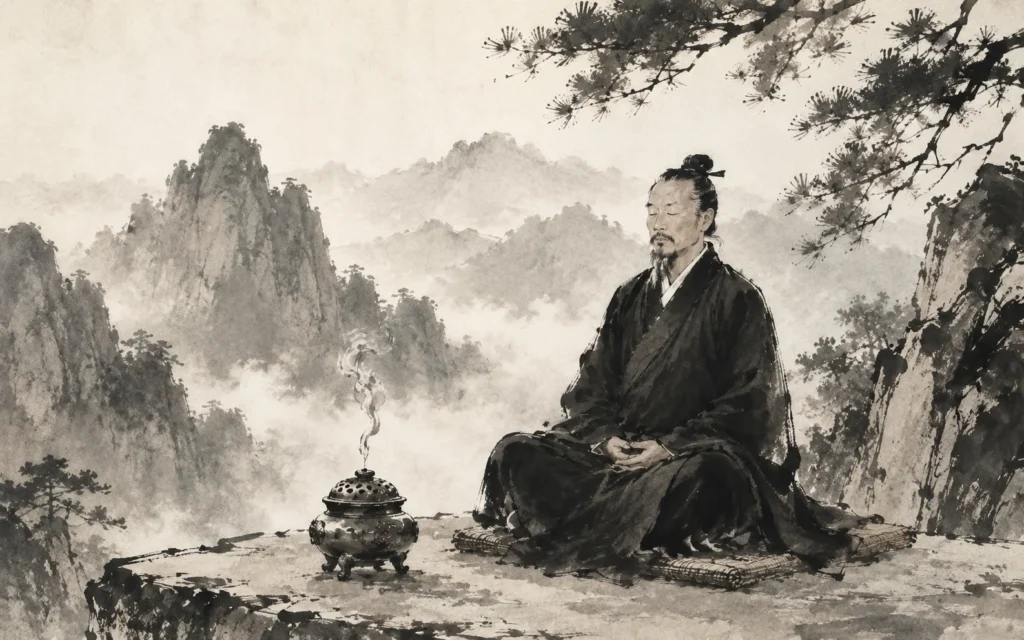
The art of incense appreciation runs deep in East Asian culture. In China, the practice of 香道 (Xiang Dao, “the Way of Incense”) dates back over two thousand years to the Han Dynasty, when incense was integral to court ceremonies, scholarly gatherings, and spiritual cultivation. Incense was not merely a fragrance — it was a medium for contemplation, a marker of refinement, and a bridge between the material and spiritual worlds.
“焚香静坐,消遣世虑” — “Burn incense and sit in stillness, releasing the worries of the world.” — Traditional Chinese proverb
Japanese Kōdō (香道, “the Way of Fragrance”) evolved from Chinese incense culture and elevated it further into a disciplined art form. In Kōdō, participants engage in monkō (“listening to incense”) — a meditative practice of deep, attentive smelling that cultivates presence and sensory awareness.
The modern backflow incense cone emerged in the early 2000s as artisans in Fujian and Guangdong provinces in China began experimenting with cone compositions that could produce downward smoke flow. By adjusting the density of the aromatic paste and engineering a hollow center channel, they created cones whose smoke would cascade rather than rise. The innovation spread rapidly, and today incense waterfall burners are produced in ceramic workshops across Asia, blending ancient incense wisdom with contemporary design.
For more on the philosophical framework underpinning these traditions, explore the Five Elements page, which explains how the Five Elements theory shapes Chinese approaches to scent, space, and well-being.
Types of Backflow Incense
Cone Varieties and Scent Profiles
The most common form of backflow incense is the cone, typically measuring 3.5 to 4 centimeters in height with a hollow bore through the center. These waterfall incense cones come in a wide range of scent profiles:
Floral blends are among the most popular. Rose-scented incense, such as our Hand-Rolled Rose Incense Sticks, combine the gentle, heart-opening aroma of real rose petals with traditional hand-rolled craftsmanship. These are ideal for evening relaxation and emotional unwinding.
Woody and resinous scents draw on traditional incense materials — sandalwood, agarwood, cedar, and frankincense. These produce a warmer, more grounding aromatic smoke that pairs naturally with meditation and contemplative practice. See our Sandalwood Guide and Agarwood Guide for a deeper exploration of these foundational incense materials.
Herbal and spice blends incorporate ingredients like cinnamon, clove, and mugwort. These tend to produce slightly denser smoke and a more pungent fragrance profile, well-suited to colder months or spaces where you want a warming presence.
Backflow Sticks and Specialty Forms
While cones dominate the market, some makers produce backflow sticks — thicker-than-average incense sticks with a dense formulation that produces heavier smoke. These require a specialized holder with a downward-catching channel and produce a less dramatic but still visible cascading effect. They typically burn longer than cones, lasting 40 to 60 minutes.
How to Use Backflow Incense Cones: A Step-by-Step Guide
Setting Up Your Backflow Incense Burner
Learning how to use backflow incense cones properly ensures both the best visual effect and the safest experience. Follow these steps:
Step 1: Choose a stable, level surface. Place your backflow incense burner on a flat, heat-resistant surface away from drafts. Air movement from fans, open windows, or air conditioning will disrupt the cascading smoke effect. Even a gentle breeze can scatter the waterfall pattern.
Step 2: Ensure the burner channel is clear. Most burners feature a small hole or channel where the cone sits. Check that this passage is free of ash residue from previous uses. A blocked channel will prevent the smoke from flowing downward properly.
Step 3: Place the cone. Set one backflow cone on the designated holder, aligning the hollow bottom of the cone with the burner’s smoke channel. The cone should sit upright and stable.
Step 4: Light the cone. Use a match or lighter to ignite the tip of the cone. Let the flame burn for 5-10 seconds until the tip glows red, then gently blow it out. You should see smoke beginning to form.
Step 5: Watch the smoke flow. Within 15-30 seconds, the waterfall effect will begin. Dense, cool smoke will start pouring down the channels and tiers of your burner, creating the signature incense waterfall display. A single cone typically burns for 20-30 minutes.
Step 6: Extinguish safely. If you need to stop the burn early, place a small metal cap or ceramic lid over the cone to cut off oxygen. Never use water on a burning cone — the thermal shock can crack your ceramic burner.
Safety Tips and Maintenance
Always burn backflow incense in a well-ventilated room, even though the smoke stays low. Keep burners out of reach of children and pets. Clean your burner weekly by brushing out ash residue from the smoke channels — a soft-bristle brush or compressed air works well. For glazed ceramic burners, a damp cloth can remove the oily film that builds up from repeated use. Avoid harsh chemical cleaners that could leave residue and contaminate future burns.
Backflow Incense for Meditation and Mindfulness
Visual Focus and Breath Synchronization
Backflow incense for meditation serves a dual purpose: it provides a moving visual anchor and it structures the rhythm of your breathing practice. The slow, deliberate flow of cascading smoke gives the eyes a single, gently shifting point of focus — similar to candle gazing (trataka) in yoga, but with continuous fluid motion instead of a static flame.
Practitioners often synchronize their breath with the smoke’s movement. Inhale as the smoke gathers and pools at a ledge. Exhale as it spills over and descends to the next level. This creates a natural breathing cadence of roughly 4-6 seconds per cycle, which aligns with the parasympathetic nervous system’s relaxation response.
In traditional Chinese meditation practice, watching incense smoke (观香, guan xiang) was considered a form of moving contemplation — a way to quiet the mind by following something that is itself in constant, effortless motion.
For a structured approach to incorporating backflow incense into your daily practice, our Incense Ritual Guide offers a complete framework for building a mindful incense routine. You may also find our Fire Element exploration helpful for understanding how fire-based rituals connect to transformation and energy in Chinese philosophy.
Creating a Meditation Space
Position your burner at eye level when seated — on a low table or floor altar if you meditate on a cushion, or on a shelf at desk height if you practice in a chair. The visual effect is most impactful when you can watch the smoke flow at a natural gaze angle without straining your neck. Surround the burner with minimal, calming objects — a small plant, a smooth stone, or a piece of mindful jewelry that anchors your intention for the session.
Choosing the Best Backflow Incense Burner
Materials: Ceramic, Stone, and Resin
The best backflow incense burner for you depends on your aesthetic preferences, budget, and intended use. The three primary materials each have distinct characteristics:
Ceramic burners are the most popular and widely recommended. High-fired stoneware and porcelain hold heat well, are easy to clean, and come in a vast range of designs. Glazed ceramic provides a smooth surface that the smoke flows over beautifully, and the non-porous finish resists staining. Handcrafted ceramic burners from artisan workshops in Jingdezhen and Dehua are particularly prized for their quality, with layered mountain-ridge designs giving the smoke multiple tiers to cascade over.
Stone burners carved from soapstone, marble, or slate offer a raw, natural aesthetic. They tend to be heavier and more stable, which is an advantage if you have pets or children. However, the rougher surface texture can cause the smoke to break apart rather than flow smoothly.
Resin burners are the most affordable option and allow for intricate, detailed sculpting. They can mimic the look of wood, stone, or metal at a fraction of the cost. However, resin does not handle heat as well as ceramic, and the smoke channels may degrade over time with heavy use.
Design Styles: Mountain, Waterfall, and Pagoda
The shape of your backflow burner determines how the smoke flows and what visual story it tells:
Mountain designs feature layered ridges and peaks that the smoke tumbles over like mist rolling down a mountainside. These evoke the Chinese landscape painting tradition (山水画, shanshui hua) and connect to the Earth Element in Five Elements philosophy.
Waterfall designs incorporate carved channels and ledges that direct the smoke into a single, dramatic cascade — mimicking the flow of water over a cliff face. These align with the Water element and are excellent for feng shui applications.
Pagoda and temple designs feature miniature architectural elements with smoke flowing through doorways, around columns, and down staircases. The Zen Lotus Incense Burner is a standout example, combining the zen aesthetic of lotus-form ceramics with the mesmerizing smoke effect.
For a broader look at the burner options available, browse the full Incense Burners collection, which includes backflow-compatible pieces alongside traditional holders for stick and cone incense.
Backflow Incense vs Regular Incense: When to Choose Each
Pros and Cons at a Glance
Understanding when to reach for backflow incense versus regular incense comes down to your intention for the session.
Choose backflow incense when:
– You want a visual meditation anchor or a striking centerpiece for a room
– You are hosting guests and want to create a conversation piece
– You are practicing contemplative arts where visual focus enhances the experience
– You want localized scent that does not overwhelm a small space
– You are working with feng shui and want to activate the Water element visually
Choose regular incense when:
– Your primary goal is to fragrance an entire room
– You need a longer-lasting scent throw for a large space
– You want a simpler setup without a specialized burner
– You are performing traditional incense ceremonies that call for rising smoke
– You prefer stick or coil formats for convenience
Both types have their place in a well-rounded incense practice. Many practitioners keep backflow cones for meditation and quiet evenings, and regular sticks or cones for daily ambient scenting. Explore the full incense collection to find options for every occasion.
Backflow Incense and Feng Shui: The Water Element Connection
Activating Water Energy in Your Space
In feng shui and the Chinese Five Elements system (五行, Wu Xing), water represents flow, abundance, career advancement, and emotional depth. The visual effect of backflow incense — smoke pouring downward like a waterfall — is a direct activation of the Water element in your environment.
Our Five Elements Calculator can help you determine which elements are dominant or deficient in your personal energy profile. If your chart shows a need for more Water energy (a common finding for those navigating career transitions or emotional healing), incorporating a smoke fountain into your daily routine can serve as a gentle, consistent Water element remedy.
Placement Recommendations by Room
Home office or study: Place a backflow incense burner on your desk or a nearby shelf to the north of the room (the feng shui direction associated with Water and career). The flowing smoke symbolizes the smooth progress of work and the steady movement of opportunities.
Bedroom: A burner on a bedside table or dresser creates a calming pre-sleep ritual. Choose gentle floral scents like Hand-Rolled Rose Incense Sticks to promote emotional relaxation. Avoid placing it directly next to the bed — the smoke, while beautiful, is still particulate matter.
Meditation or yoga room: This is the ideal environment for backflow incense. Position the burner at the front of the room as a focal point, or place it in the north or east corner to combine Water energy with the growth energy of Wood (which Water nourishes in the Five Elements cycle).
Living room: A backflow burner on a coffee table or console shelf serves as both a decorative object and a conversation starter. For those interested in how feng shui intersects with broader life planning, our Chinese Zodiac 2026 guide explores how annual energy shifts affect each sign.
For a deeper understanding of how the Five Elements interact in your environment, our Wu Xing Guide provides a complete overview of the generative and controlling cycles that underpin feng shui practice.
Frequently Asked Questions
1. What is backflow incense and why does the smoke go down?
Backflow incense is a type of incense cone specially formulated to produce smoke that flows downward instead of rising. The cone has a hollow channel through its center that directs smoke to exit from the bottom. Because the smoke cools as it passes through this channel, it becomes denser than the surrounding room air, and gravity pulls it downward — creating a waterfall-like cascading effect. The science is straightforward: cooler, denser smoke sinks while warmer, lighter smoke rises.
2. How do you use backflow incense cones with a burner?
To use backflow incense cones, place the cone on the designated holder of your backflow incense burner, making sure the hollow bottom of the cone aligns with the burner’s smoke channel. Light the tip of the cone with a match or lighter, let it burn for 5-10 seconds, then blow out the flame. Within half a minute, the smoke will begin flowing downward over the burner’s tiers and channels. Always burn on a stable, level surface away from drafts for the best visual effect.
3. Is backflow incense safe to breathe?
Backflow incense is safe when used properly in a well-ventilated room. The smoke from quality cones made with natural ingredients (sandalwood, agarwood, plant-based binders) is no more harmful than regular incense smoke. However, you should avoid burning any incense in a sealed, unventilated space for extended periods. People with respiratory conditions such as asthma should exercise caution and consult a healthcare provider. Always choose cones from reputable makers who disclose their ingredients — avoid products with synthetic fragrances or unknown binding agents.
4. What is the best backflow incense burner for beginners?
The best backflow incense burner for beginners is a mid-sized ceramic burner with a simple waterfall or mountain design. Ceramic is durable, easy to clean, and provides the smoothest surface for smoke to flow over. A burner with 3-5 tiers or ledges gives you a satisfying visual effect without being overly complex to maintain. Look for a burner with a wide, stable base and a clearly defined smoke channel. The Classic Ceramic Coil Incense Burner is an excellent starting point — its layered ridge design creates beautiful cascading patterns and it is straightforward to clean.
5. Can I use regular incense cones in a backflow burner?
No, regular incense cones will not produce the backflow waterfall effect in a backflow burner. Regular cones are designed to release smoke upward, and they lack the hollow center channel that directs smoke downward. If you place a regular cone on a backflow incense burner, the smoke will simply rise into the air as it would on any flat surface. You need specifically designed backflow cones to achieve the cascading smoke effect. That said, many burners in the Serene Orient collection are versatile enough to accommodate both styles — the Ruyi Lotus Incense Burner, for example, works beautifully with traditional cones while the Chinese Minimalist Incense Holder is designed for stick incense.
Conclusion: Backflow Incense as a Gateway to Mindful Living
Backflow incense is more than a novelty or a decorative trick. It is a modern expression of an ancient impulse — the human desire to slow down, to watch something beautiful unfold, and to find stillness in motion. The cascading smoke of a waterfall incense cone invites you to pause, breathe, and simply observe. In a world saturated with screens and urgency, that invitation is genuinely valuable.
Whether you are drawn to the physics of downward smoke flow, the craftsmanship of a hand-thrown ceramic burner, the feng shui implications of activating the Water element, or the simple pleasure of watching smoke pour like liquid over miniature mountains, backflow incense offers a rich, multi-layered experience that deepens with practice.
Start with a quality burner and a set of natural-scented backflow cones. Clear a small space. Light the cone. And let the smoke fountain do what it does best — remind you that even something as insubstantial as smoke can be shaped into something extraordinary, if you give it the right conditions and a little patience.
Explore the complete Serene Orient incense collection and burner selection to begin or deepen your practice. Visit the Serene Orient blog for more guides on incense culture, mindful living, and the timeless wisdom of East Asian traditions. To learn more about the philosophy behind our curation, visit our About page.
References & Further Reading
- Incense – Wikipedia – Historical and cultural overview of incense across civilizations
- Agarwood – Wikipedia – Scientific and cultural reference on agarwood/oud